
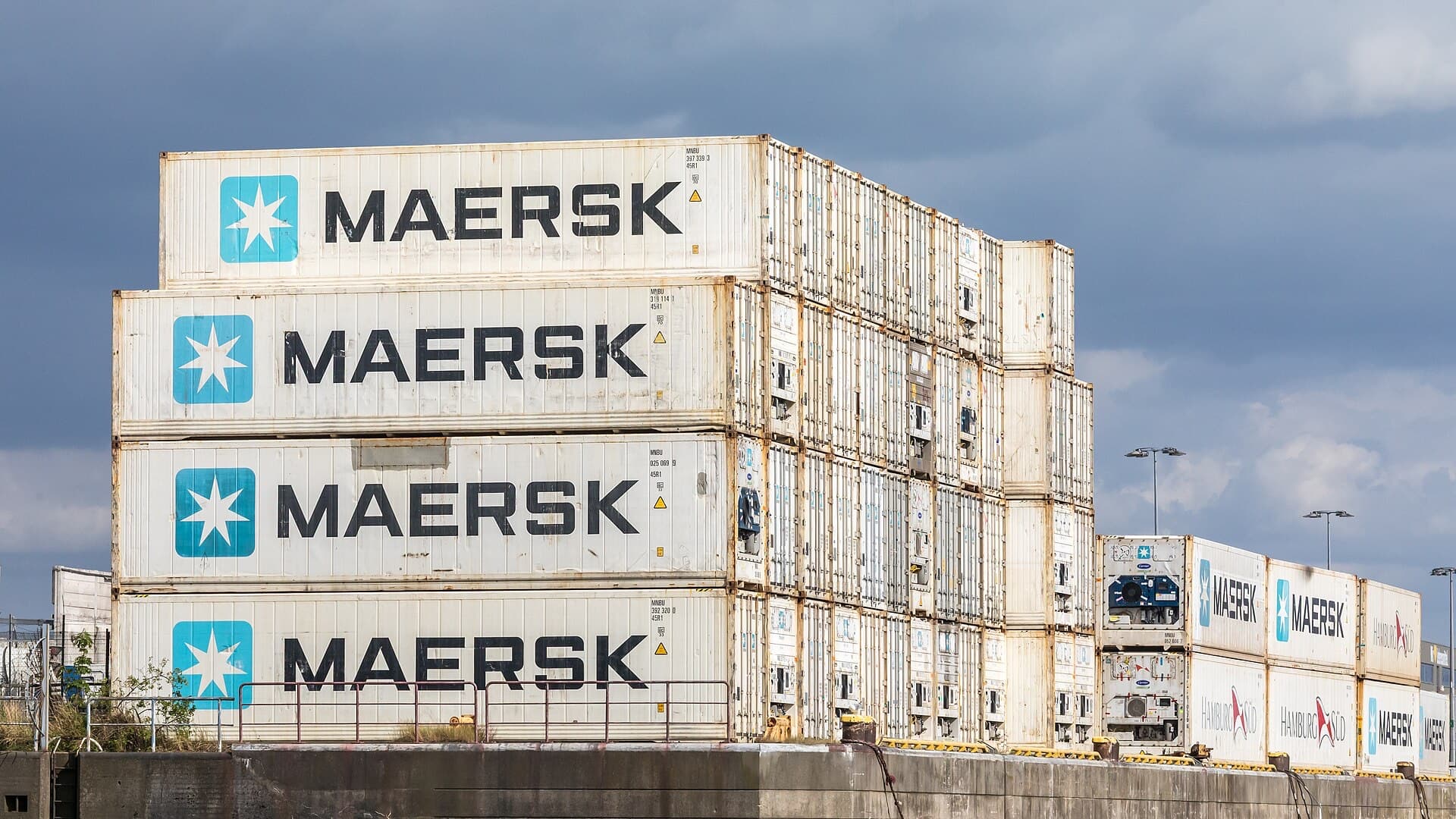
Refrigerated containers, often called reefers, are used for temporary food storage, agricultural products, pharmaceuticals, event supplies, emergency response, and overflow cold-chain capacity. The refrigeration unit is built into the container, but it still needs an external electrical supply while parked at a site.
A battery can provide quiet temporary power, bridge a grid interruption, or work with a generator that runs only during scheduled charging periods. The battery cannot be selected from container size alone. Cargo temperature, ambient conditions, door openings, defrost cycles, voltage, phase, and the required operating period all affect the result.
This guide explains how to calculate daily energy, check peak demand, and prepare a battery-only or hybrid plan for one or more refrigerated containers.
Confirm the reefer electrical specification
Start with the data plate and operating manual for the exact refrigeration unit. Reefers are commonly configured for three-phase service, and equipment built for marine transport may use a supply voltage that is not available directly from a standard North American temporary power panel.
Record:
- Manufacturer, model, and serial number
- Required voltage, phase, and frequency
- Maximum operating current
- Compressor starting or inrush current
- Plug and connector type
- Setpoint and allowable temperature range
- Chilled, frozen, or controlled-atmosphere operation
- Defrost-heater rating and schedule
- Evaporator and condenser fan settings
- Alarm, monitoring, and communications loads
- Minimum and maximum ambient temperature
- Cable length and temporary distribution arrangement
Do not assume that a three-phase battery can connect directly to every reefer. A transformer, approved adapter, or separate distribution assembly may be required. The refrigeration-unit manufacturer and a qualified electrical contractor should confirm the complete connection.
Cooling capacity is not electrical input
Manufacturer literature may list cooling capacity in watts or Btu/h. That figure describes heat removal, not necessarily the electrical power drawn from the source.
For example, Carrier publishes cooling-capacity figures for its OptimaLINE container unit at specified ambient and cargo temperatures. Those values are useful for refrigeration design, but battery sizing still needs electrical input data from the unit's nameplate, technical manual, or a power meter.
Use measured real power in kW where possible. For a balanced three-phase load, an estimate is:
kW = 1.732 x volts x amps x power factor / 1,000
Current alone is not enough unless voltage and power factor are also known. A three-phase power logger provides a more reliable operating profile.
Measure more than one operating condition
A reefer compressor cycles in response to heat entering the container and heat generated inside it. Daily energy can change with:
- Ambient temperature and direct sun
- Initial cargo temperature
- Chilled or frozen setpoint
- Cargo respiration for fresh produce
- Door-opening frequency and duration
- Airflow around and through the load
- Defrost operation
- Evaporator-fan speed
- Container insulation and door-seal condition
- Condenser cleanliness and equipment condition
The highest demand often occurs during pull-down, when warm cargo or a warm empty container is being brought to setpoint. Holding pre-cooled cargo at a stable temperature can use less energy than the initial pull-down period.
If the battery will support a critical load, log the reefer through a representative cycle. Include loading, pull-down, normal holding, defrost, daytime heat, and the expected overnight period. Record average kW, peak kW, total kWh, voltage, current, power factor, and alarms.
Calculate daily energy in kWh
The basic calculation is:
Average real power in kW x operating time in hours = energy in kWh
The International Maritime Organization uses a default reefer consumption value of 2.75 kW in a specific ship-efficiency calculation when measured data are unavailable. That regulatory default is not a design value for a land-based battery system, but it shows that average demand can be substantially lower than maximum nameplate power once temperature is stable.
Other technical references report higher averages under demanding conditions. The Container Handbook gives an example of approximately 4.2 kW for frozen operation and 7 to 8 kW for chilled banana transport in a 40-foot container at 45 C ambient. The broad range is why measured site data are preferable.
Worked example: one reefer for 24 hours
Assume a meter records an average real-power demand of 4.5 kW over a representative day:
4.5 kW x 24 hours = 108 kWh
Adding a 10% allowance for conversion losses and operating reserve gives:
108 kWh x 1.10 = 118.8 kWh
This is a planning example, not a standard consumption figure. A reefer averaging 2.75 kW would use 66 kWh over 24 hours before reserve. A unit averaging 7 kW would use 168 kWh before reserve.
| Average reefer load | 24-hour energy | With 10% allowance |
|---|---|---|
| 2.75 kW | 66.0 kWh | 72.6 kWh |
| 4.50 kW | 108.0 kWh | 118.8 kWh |
| 7.00 kW | 168.0 kWh | 184.8 kWh |
The allowance should reflect battery reserve settings, temperature, measurement uncertainty, recharge reliability, and the consequence of an early shutdown. Cold-chain operations may require a larger contingency than a non-critical temporary load.
Check peak power and compressor starting
Daily kWh determines runtime, while inverter kW determines whether the system can operate the equipment at a given moment.
The peak calculation should include:
- Compressor startup or speed ramp
- Condenser and evaporator fans
- Defrost heaters
- Crankcase or drain heaters
- Monitoring and communications equipment
- Other reefers on the same distribution panel
- Battery charger demand if the source can charge while serving the load
Some modern reefers use variable-speed drives or controlled starting. Others can produce a higher short-duration demand when the compressor starts. Confirm the inverter's continuous rating, surge rating, overload duration, phase configuration, and voltage response against the refrigeration-unit data.
For multiple containers, identify the maximum coincident demand. Controls may start several compressors after a power restoration, so the restart sequence needs review. A staggered restart can reduce the simultaneous peak where the reefer controls and operating procedure permit it.
Account for pull-down separately
Pull-down can consume a significant share of the available battery energy. Loading warm product into a container and asking the reefer to cool it may require prolonged high compressor output. A transport reefer is generally designed to maintain cargo temperature, and its suitability for cooling warm product should be confirmed with the cargo and refrigeration specialists.
Where possible:
- Pre-cool the container before switching to battery power.
- Load product at the required carriage temperature.
- Minimize door-open time.
- Maintain clear floor channels and airflow around the cargo.
- Verify that the return-air temperature has stabilized.
- Begin the battery operating window after the main pull-down load.
If pull-down must occur on battery power, meter a representative cycle and add that energy to the holding requirement.
Plan for ambient temperature and weather
A reefer in direct summer sun can require more cooling than the same unit under milder conditions. Winter operation can also use energy for heating or defrost, depending on the setpoint, cargo, and refrigeration design.
The power plan should cover the site's expected design conditions, not only the weather during an initial test. For deployments in Canada and the northern United States, confirm the battery's cold-weather operating limits and thermal-management behaviour. Our guide to cold-weather battery power for construction sites explains how temperature affects battery planning.
Keep condenser airflow clear and follow the reefer manufacturer's spacing and service-access requirements. Snow, plastic wrap, dust, vegetation, and nearby equipment can restrict airflow or interfere with maintenance.
Battery-only, grid-assisted, or hybrid
Battery-only
Battery-only operation can suit a defined bridge period, a quiet overnight interval, or a measured load with a dependable recharge window. It avoids direct exhaust and fuel handling while discharging.
For critical cargo, the plan should include temperature monitoring, state-of-charge alarms, a low-energy response, and a backup source that can be connected before temperature limits are reached.
Grid-assisted
A battery can bridge temporary grid interruptions or operate during a site transfer. The grid connection may also recharge the battery while serving the reefer. Service capacity must include both load and charger demand unless controls limit them.
Battery and generator hybrid
A hybrid system can support a longer deployment. The battery carries the reefer during quiet or low-load periods, and the generator runs at planned intervals to recharge it or serve higher demand.
Trane offers battery packs specifically for refrigerated containers, with 35, 70, and 105 kWh options and 20 kW output. Aggreko also documents temporary power for reefer cold storage. These commercial offerings show that battery and temporary-generation systems are already used in this application, but each site still needs its own load and connection review.
Our guide to electric generators and diesel generators for commercial sites compares battery-only, diesel, and hybrid operating patterns.
Solar-assisted
Solar can offset part of the daytime load or recharge the battery. Production changes with season, cloud, smoke, snow, shading, orientation, and charge-controller limits. Refrigeration is continuous, so the design must account for nights and low-production days rather than matching the solar array only to a clear afternoon.
Monitoring and contingency planning
The power system and the cargo-temperature system should be monitored independently. A battery can report normal electrical output while a refrigeration fault prevents the container from cooling.
Prepare alarm thresholds and response procedures for:
- Cargo or return-air temperature outside the allowed range
- Reefer alarm or compressor fault
- Low battery state of charge
- Battery, inverter, transformer, or distribution fault
- Failed grid or generator recharge
- Ground fault or protective-device trip
- Open door or damaged seal
- Loss of remote communications
Assign a person or service provider to receive alarms at all operating hours. Keep compatible backup power, connectors, and switching procedures available where cargo loss or public-health consequences are significant.
Food, pharmaceutical, and regulated cargo may have separate temperature-recording, sanitation, validation, and chain-of-custody requirements. The battery power plan should be integrated into the operator's cold-chain and emergency procedures.
Where Skyridge Power systems fit
The Apex Station is the closer fit for a commercial reefer deployment. Its published specifications include:
- 120 kWh of LiFePO4 storage
- 30 kW continuous output
- Configurable 120/240 V output
- Single-phase and three-phase configurations
- Grid, generator, and solar charging compatibility
- Up to 30 kW of solar input
- Less than 20 ms transfer time
The worked example's 118.8 kWh planning requirement is close to the Apex Station's nominal 120 kWh capacity. A full 24-hour battery-only interval at that measured load would leave little practical margin, so an earlier recharge, shorter bridge period, lower verified average load, or hybrid source would normally be considered.
Many transport reefers use a higher three-phase voltage than the Apex Station's published configurable 120/240 V output. A correctly rated transformer and temporary distribution assembly may therefore be required. Transformer losses must be included in the energy calculation, and the complete arrangement must be reviewed and tested by qualified personnel.
The Apex Mobile provides 16 kWh nominal capacity, 14.4 kWh usable capacity, and 12 kW continuous output. At the illustrative 4.5 kW average load, 14.4 kWh represents 3.2 hours of theoretical runtime before additional reserve and conversion losses. It may suit a shorter transfer or bridge period if voltage, phase, starting demand, and connection requirements are compatible. It is not sized for the complete 24-hour example.
Skyridge Power can review reefer nameplates, logged interval data, cargo requirements, operating conditions, voltage and phase, bridge duration, cable distance, and available charging sources to prepare a battery-only or hybrid configuration.
Sizing checklist
- Record the refrigeration-unit model, voltage, phase, frequency, current, and connector.
- Separate cooling capacity from electrical input power.
- Log average kW, peak kW, daily kWh, power factor, and alarms.
- Include pull-down, normal holding, defrost, and restart conditions.
- Model the hottest and coldest expected site conditions.
- Calculate energy from measured average kW and required runtime.
- Add battery reserve, conversion losses, and any transformer losses.
- Check compressor starting and simultaneous restart for multiple reefers.
- Define grid, generator, solar, or battery-rotation recharging.
- Provide independent cargo-temperature and power-system monitoring.
- Prepare a backup source and response procedure before storing critical cargo.
- Have a qualified electrical contractor verify the connection and temporary distribution.
Technical references include Carrier's OptimaLINE refrigerated-container specifications, the International Maritime Organization's MEPC.355(78) guidance, and the Container Handbook discussion of actual reefer power consumption. Commercial examples include Trane's compact battery pack for refrigerated containers and Aggreko's temporary power case study for chilled reefer storage.
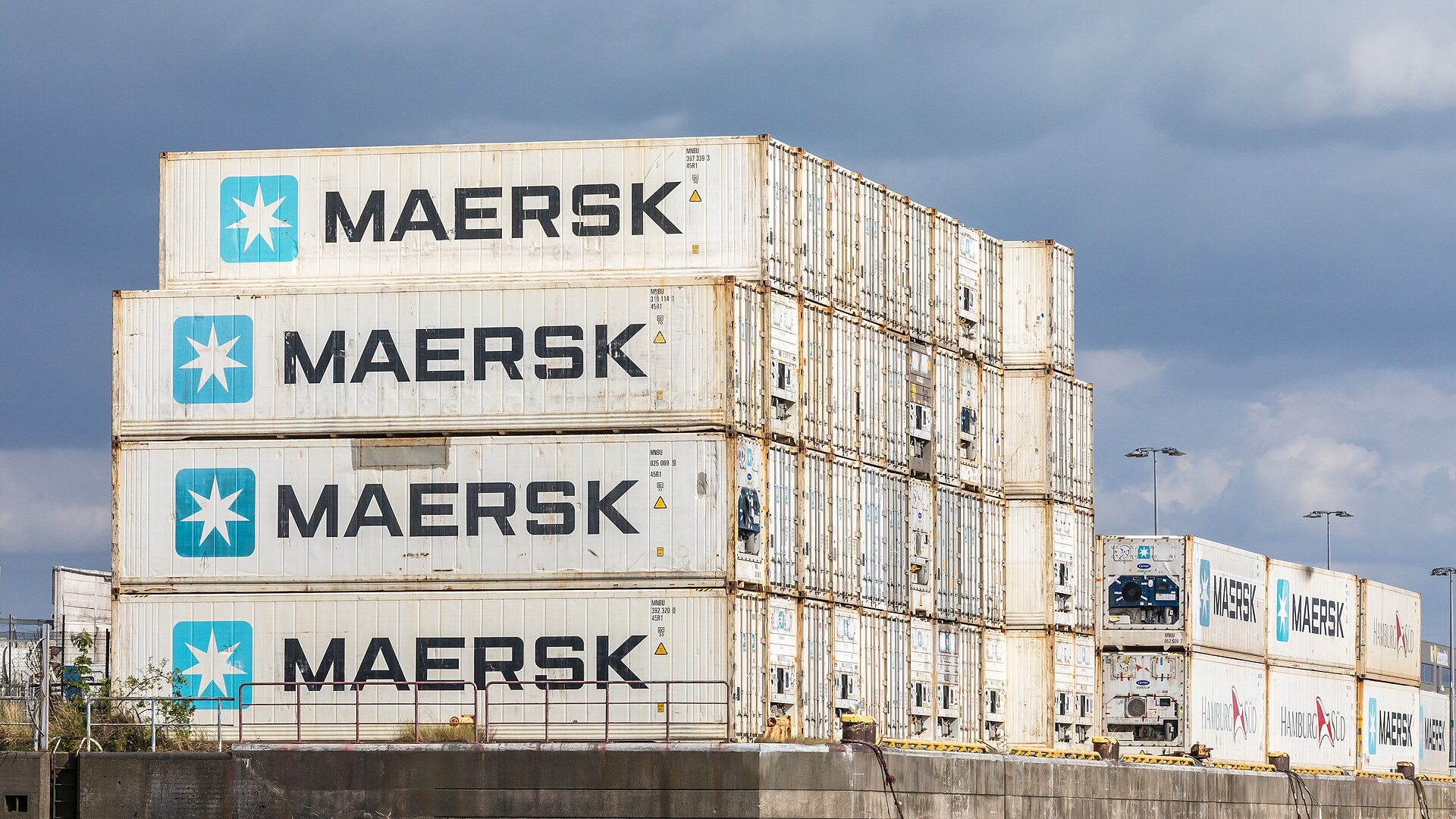
Image source: Maersk Container, O'Swaldkai, Hafen Hamburg-9250.jpg by Raimond Spekking, licensed under CC BY-SA 4.0. The image was resized to a 1920 x 1080 landscape format.
