
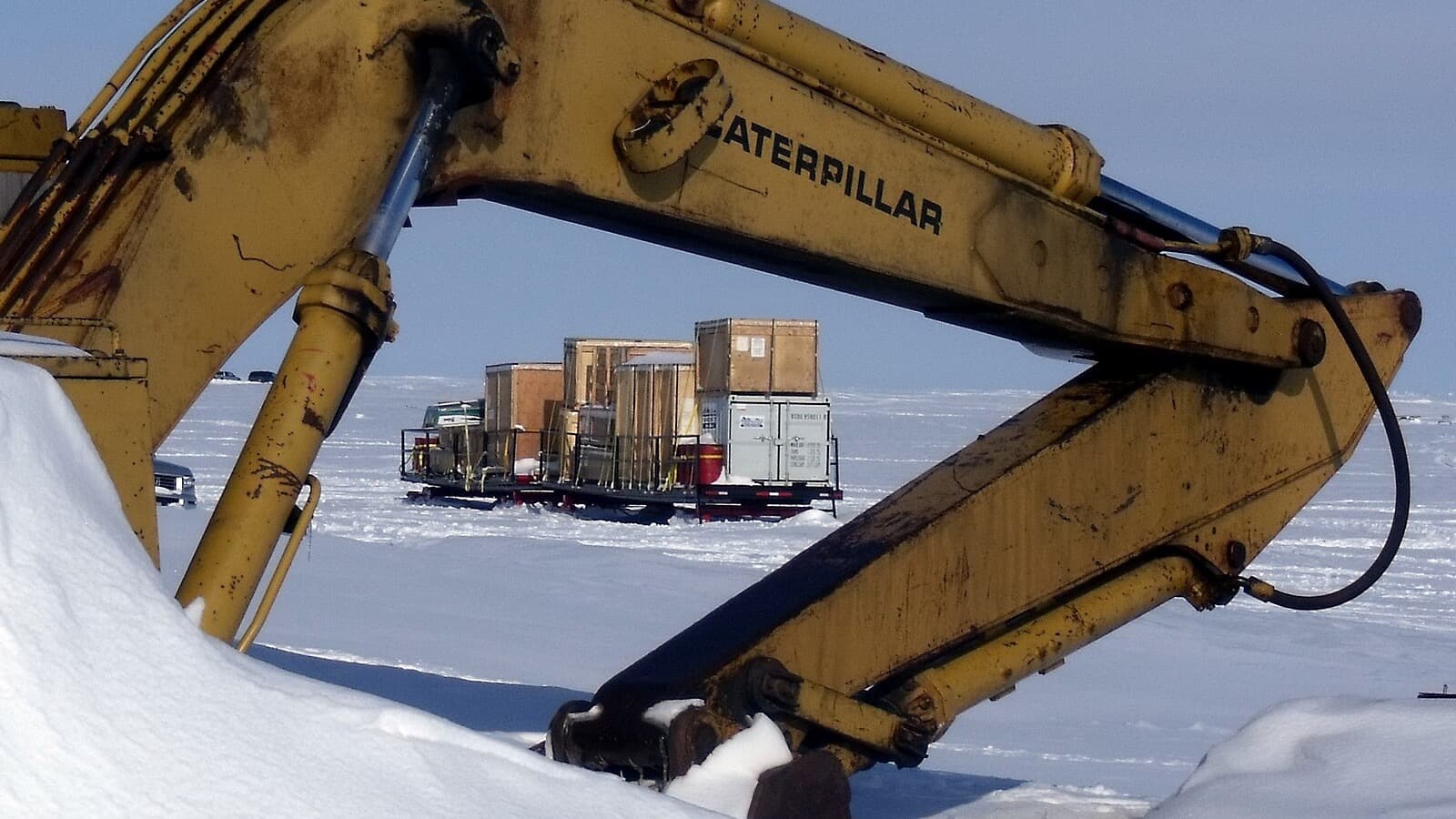
Battery energy storage can supply quiet temporary power for tools, charging stations, lighting, site offices, security systems, pumps, and other construction loads. In winter, the same system needs a different operating plan than it would in mild weather.
Low temperatures can reduce available battery capacity and power. Charging may take longer or be restricted until the battery is warm enough. At the same time, the jobsite may add electric heaters, heat tracing, longer lighting hours, and other seasonal loads.
The result is straightforward: a battery system that covers a normal workday in September may have less reserve during a cold week in January.
How cold affects lithium-ion batteries
Cold temperatures slow the movement of lithium ions inside a battery. Internal resistance increases, and the battery may deliver less usable energy and power than it would at a moderate temperature.
National Renewable Energy Laboratory research describes three related effects in cold conditions:
- Lower available energy capacity
- Lower power output
- Lower charging efficiency
The size of the reduction depends on battery chemistry, cell design, temperature, load, state of charge, and the system's thermal management. There is no single winter derating percentage that applies to every commercial battery system.
Charging also needs close attention. A battery management system may reduce or stop charging when cell temperatures are below the permitted range. This protects the battery, but it can extend the time required to prepare the system for the next shift.
Always use the operating and charging limits supplied by the equipment manufacturer. Ambient air temperature alone does not confirm the temperature of the battery cells inside an enclosure.
Winter changes the site's energy use
Cold weather does not only affect the battery. It changes the load profile.
Common winter additions include:
- Electric heaters in site offices, lunchrooms, and work enclosures
- Heat tracing for pipes, hoses, tanks, and temporary water service
- Battery blankets or equipment heaters
- Longer use of temporary lighting
- Fans used with temporary heating and drying equipment
- Chargers for cordless tools that cycle more frequently
- Pumps used for dewatering, snowmelt, or freeze protection
- Communications, cameras, and security systems running through longer nights
Resistance heaters are especially significant. A single 1,500W heater running for eight hours uses 12 kWh before losses. Four heaters under the same assumption use 48 kWh.
That energy use can be larger than the combined daily demand from many handheld tools.
Example winter jobsite energy estimate
The following example represents a small commercial site with a trailer, tool charging, lighting, security, and limited electric heat. Actual usage should be measured or calculated from the equipment on the project.
| Load | Average draw | Daily runtime | Daily energy |
|---|---|---|---|
| Site office equipment and interior lighting | 0.8 kW | 9 hours | 7.2 kWh |
| Two 1,500W heaters at a 50% duty cycle | 1.5 kW average | 10 hours | 15.0 kWh |
| Cordless tool charging station | 0.8 kW | 6 hours | 4.8 kWh |
| Exterior LED lighting | 0.4 kW | 14 hours | 5.6 kWh |
| Cameras, internet, and access control | 0.2 kW | 24 hours | 4.8 kWh |
| Intermittent corded tools | 1.5 kW | 1.5 hours total | 2.25 kWh |
| Calculated daily total | 39.65 kWh |
The calculated total is not the final battery size. The plan still needs to allow for inverter losses, temperature-related performance changes, reserve capacity, startup loads, and schedule changes.
Adding 25% planning reserve would bring this example to about 49.6 kWh. A project may need a larger reserve if temperatures are severe, charging opportunities are limited, or critical loads must continue overnight.
Separate heating loads from operating loads
Electric space heating can dominate the daily energy calculation. It is useful to separate heating from the rest of the site load before selecting a battery system.
For example:
- Tools, chargers, lighting, and electronics may use 20 kWh per day
- Temporary electric heat may add another 30 to 60 kWh per day
- Heat tracing and overnight freeze protection may continue after the crew leaves
This breakdown gives the project team more options. The battery may carry all loads, or heating may be handled separately so stored electricity remains available for tools, communications, lighting, and critical controls.
The lowest-energy option is often to reduce heat loss first. Insulation, air sealing, smaller heated zones, thermostat scheduling, and properly sized equipment can reduce the storage capacity needed for the same workday.
Plan where the battery system will sit
Equipment placement affects temperature, cable routing, access, and daily operation.
A winter deployment plan should address:
- The manufacturer's permitted storage, charging, and discharging temperatures
- Whether the enclosure includes thermal management or requires a cold-weather provision
- Protection from snow accumulation, standing water, roof runoff, and drifting snow
- Safe ventilation and service clearances
- Access for inspection, snow clearing, charging, and transport
- Cable routes that will not be buried, frozen into ice, or damaged by plowing
- The effect of cable length and cold conditions on setup and voltage drop
Placing equipment in a heated building is not automatically appropriate. Battery systems still require the clearances, ventilation, fire protection, and installation conditions specified by the manufacturer and applicable codes.
Start the shift with a charging plan
A battery system may finish the workday with enough stored energy for overnight loads but still need several hours to recharge. In cold weather, recharge timing should include any warm-up or charge-rate limitations.
Common recharge arrangements include:
- Grid charging during off-hours
- Scheduled generator charging
- Solar-assisted charging
- A hybrid plan using grid, generator, and solar when available
Solar production is variable in winter. Shorter days, low sun angles, snow cover, and cloud can reduce daily collection. Solar input should be treated as a measured contribution, not an assumed full recharge.
For remote sites, a generator-battery hybrid can provide a practical schedule. The generator runs during planned charging or high-load periods, while the battery carries lower loads, overnight equipment, and sound-sensitive work without continuous engine operation.
Check peak power as well as daily energy
Daily kWh determines how long a battery can support the site. Peak kW determines whether it can run the equipment that starts at the same time.
Winter can raise both numbers. A site trailer heater, air compressor, pump, and charger bank may overlap at the beginning of a shift. Motors can also have startup demand above their normal running draw.
Build a peak-load list that includes:
- The largest individual load
- Motor and compressor startup requirements
- Loads likely to operate at the same time
- 120V and 240V circuit requirements
- Single-phase or three-phase equipment
- Critical loads that cannot be interrupted
Do not select a system from daily kWh alone. A battery may hold enough energy for the day but still lack the output or surge capacity to start the required equipment.
Use measured data when it is available
Estimates are useful before mobilization. Metered data is better once work begins.
Record at least:
- Daily energy used in kWh
- Highest simultaneous demand in kW
- State of charge at the start and end of each shift
- Overnight energy use
- Recharge energy and recharge time
- Ambient temperature and any available battery temperature data
- Changes in heating, lighting, or tool schedules
A week of operating data can show whether the original reserve is sufficient and whether loads should be shifted. It can also help size the next phase of the project, when crews and equipment change.
Where the Apex Station fits
The Skyridge Power Apex Station is a commercial battery energy storage system for larger temporary power deployments. Its published specifications include:
- 120 kWh of LiFePO4 storage
- 30 kW continuous output
- Approximately four hours of runtime at full load
- Longer runtime at lower average loads
- Grid, generator, and solar charging compatibility
- Up to 30 kW of solar input
- Single-phase and three-phase configurations available
Using the 39.65 kWh daily example above, the nominal 120 kWh capacity provides room beyond one calculated workday. The actual available runtime on a winter site depends on temperature, thermal management, reserve settings, load profile, charging conditions, and the specific system configuration.
For smaller zones, mobile crews, charger stations, and intermittent loads, the Apex Mobile provides 16 kWh nominal capacity and 12 kW continuous output. For a full site or multi-zone deployment, Apex Station provides the larger energy and output platform.
Skyridge Power can review a site's load list, winter schedule, temperature range, charging access, and operating requirements before recommending a configuration. That review should include the selected equipment's approved temperature limits and any cold-weather provisions required for the deployment.
Final takeaway
Cold-weather battery planning starts with the normal site load and adds three winter adjustments: reduced battery performance, additional seasonal loads, and a more conservative recharge schedule.
The largest change often comes from electric heating rather than tools. Separating those loads, adding a documented reserve, checking peak demand, and monitoring actual use will produce a more reliable storage estimate.
Technical references include National Renewable Energy Laboratory research on lithium-ion performance in cold temperatures, NREL guidance on stationary lithium-ion battery modelling and manufacturer temperature limits, and Atlas Copco's commercial energy storage system specifications. See the Skyridge Power Apex Station specifications for product output, capacity, and charging details.
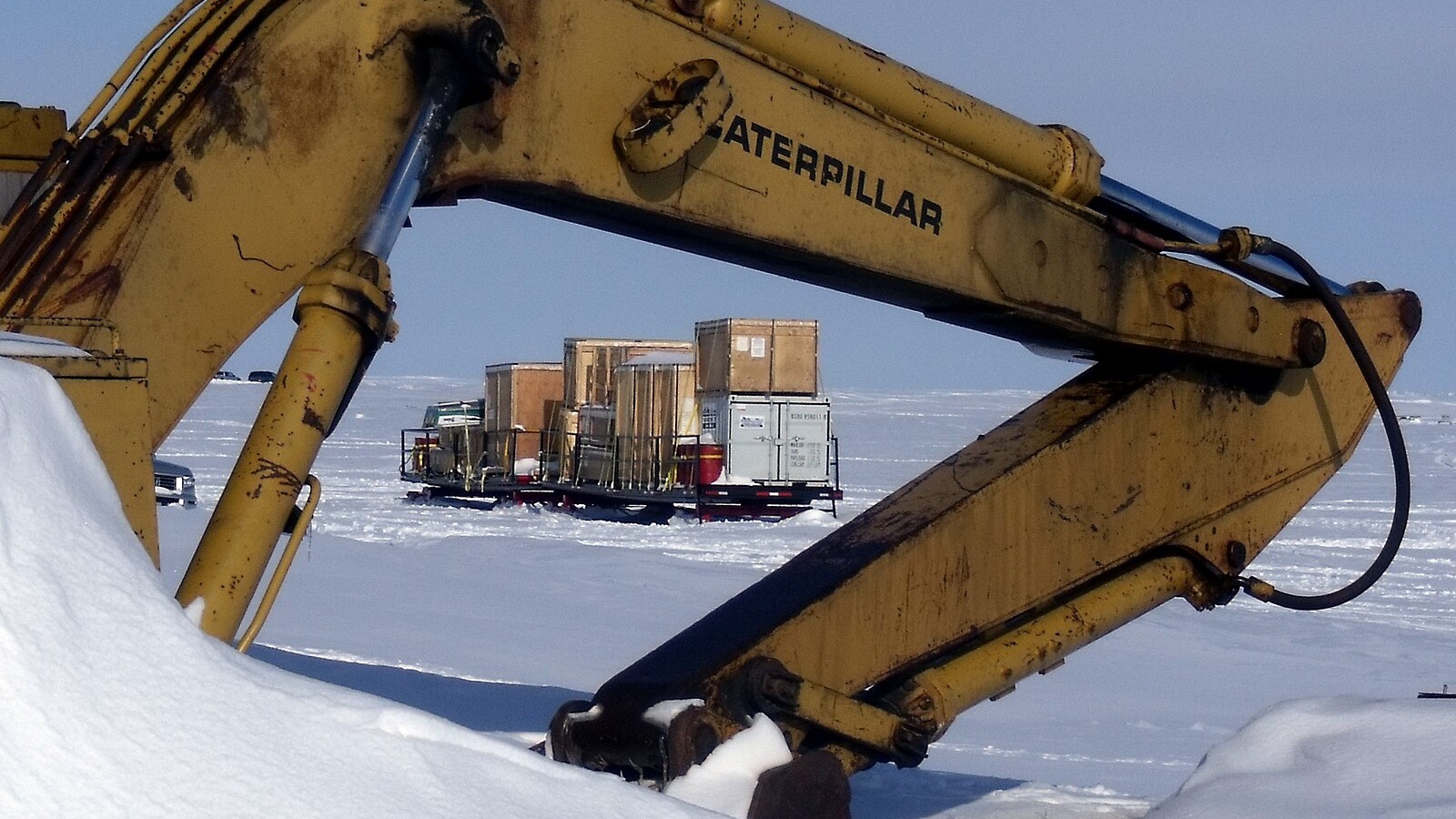
Image source: Construction in Arviat -a.jpg by Mike Beauregard, licensed under CC BY 2.0. The image was cropped to a landscape format.
