
Portable power for a jobsite is not only about whether a tool can start. It is also about how much energy the site uses over the day.
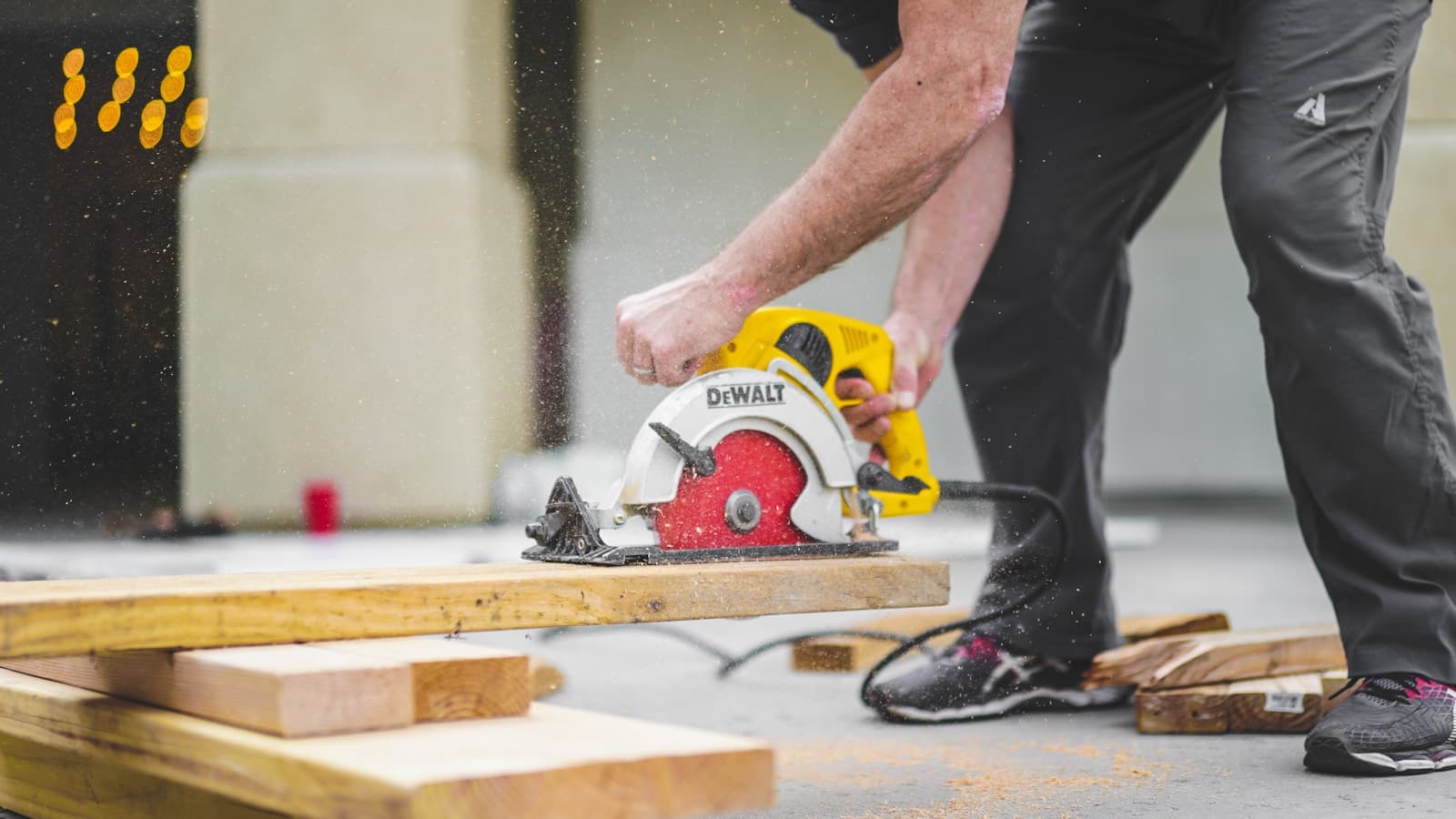
A circular saw may draw 1,500W or more while cutting, but it may only run for minutes at a time. A battery charger may draw less power, but it can run for hours. Site lighting may draw modest power, but it may stay on through an entire shift or overnight.
For battery storage, those details change the sizing. A site with one heavy tool used intermittently can use less daily energy than a site with many small loads running all day.
The two numbers to separate: kW and kWh
Temporary power planning needs two numbers:
- kW: how much power the system can deliver at one moment
- kWh: how much energy the system can store and deliver over time
A 1,500W saw is a 1.5 kW load while it is running.
If that saw runs for 20 total minutes in a day, it uses:
1.5 kW x 0.33 hours = 0.5 kWh
If a 300W charger bank runs for 6 hours, it uses:
0.3 kW x 6 hours = 1.8 kWh
That is why battery sizing should include both the tool rating and the expected daily runtime.
Typical power draws for common jobsite loads
The numbers below are planning ranges. Actual power use depends on tool model, material, cut depth, duty cycle, charger type, motor load, and startup surge. For corded tools, a quick estimate is:
amps x volts = watts
For a 120V site circuit, a 15A tool can draw up to about 1,800W.
| Jobsite load | Typical running draw | Common daily use | Estimated daily energy |
|---|---|---|---|
| Circular saw, 7-1/4 in. corded | 1,200W to 1,800W | 15 to 45 min trigger time | 0.3 to 1.4 kWh |
| Miter saw, 10 in. to 12 in. | 1,500W to 1,800W | 15 to 60 min trigger time | 0.4 to 1.8 kWh |
| Angle grinder, 4-1/2 in. | 800W to 1,400W | 20 to 90 min trigger time | 0.3 to 2.1 kWh |
| SDS-max demolition hammer | 1,200W to 1,700W | 1 to 4 hr active use | 1.2 to 6.8 kWh |
| Small pancake air compressor | 1,200W to 1,600W while running | 1 to 3 hr motor runtime | 1.2 to 4.8 kWh |
| Larger portable air compressor | 1,500W to 2,400W while running | 1 to 4 hr motor runtime | 1.5 to 9.6 kWh |
| Battery charger, single rapid charger | 250W to 350W | 2 to 8 hr | 0.5 to 2.8 kWh |
| Multi-bay rapid charger | 500W to 750W | 2 to 8 hr | 1.0 to 6.0 kWh |
| LED string lights, 100 ft. | 80W to 160W | 8 to 12 hr | 0.6 to 1.9 kWh |
| LED area light or tower section | 100W to 500W | 6 to 12 hr | 0.6 to 6.0 kWh |
| Site office trailer basics | 500W to 1,500W average | 8 to 10 hr | 4.0 to 15.0 kWh |
| Internet, cameras, security, sensors | 50W to 300W | 12 to 24 hr | 0.6 to 7.2 kWh |
| Small pump or fan | 300W to 1,500W | 2 to 12 hr | 0.6 to 18.0 kWh |
These ranges are intentionally broad. A trim crew, framing crew, concrete crew, and site-office setup can all use portable power differently.
Example 1: small framing or renovation crew
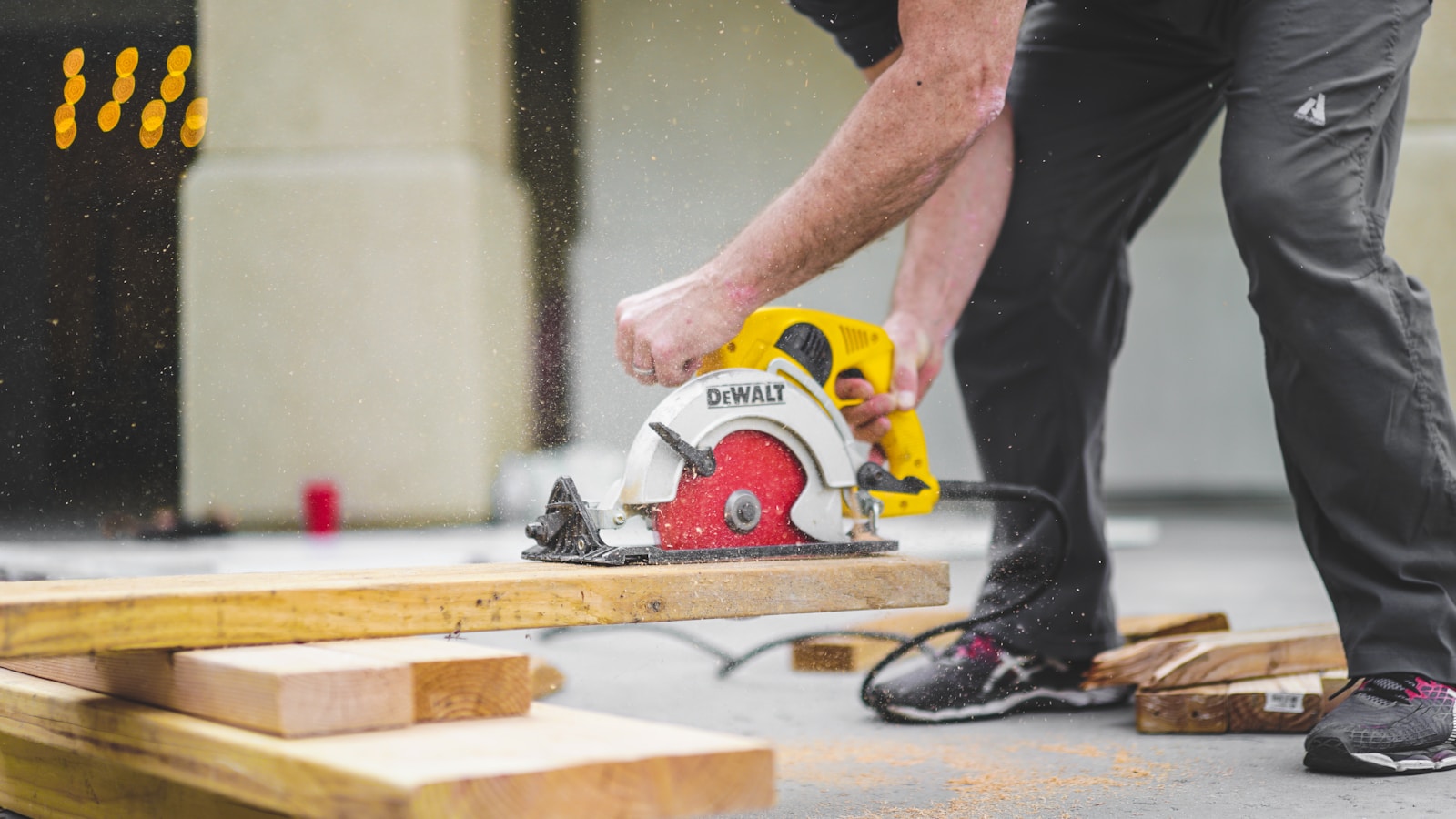
This example assumes a crew using a mix of corded tools, cordless battery chargers, temporary lighting, and basic site electronics.
| Load | Planning draw | Daily use | Daily energy |
|---|---|---|---|
| Circular saw | 1.5 kW | 30 min active cutting | 0.75 kWh |
| Miter saw | 1.6 kW | 30 min active cutting | 0.80 kWh |
| Angle grinder | 1.0 kW | 30 min active grinding | 0.50 kWh |
| Two rapid chargers | 0.6 kW total | 5 hr | 3.00 kWh |
| LED string lights | 0.12 kW | 8 hr | 0.96 kWh |
| Router, camera, small electronics | 0.10 kW | 10 hr | 1.00 kWh |
| Estimated daily total | 7.01 kWh |
With inverter losses, reserve capacity, cold-weather effects, and unexpected use, a practical planning number may be closer to 9 to 11 kWh for this type of day.
This is the type of use case where a smaller commercial battery system can work well, especially if it can recharge overnight or during breaks.
Example 2: tool-heavy crew with compressors and chargers
This example assumes more air-tool support, more battery charging, and longer active tool use.
| Load | Planning draw | Daily use | Daily energy |
|---|---|---|---|
| Circular saws and miter saw | 1.6 kW average | 1.5 hr active use | 2.40 kWh |
| Angle grinders | 1.2 kW average | 1.5 hr active use | 1.80 kWh |
| Pancake compressor | 1.4 kW while motor runs | 2 hr motor runtime | 2.80 kWh |
| SDS hammer or demo hammer | 1.5 kW | 2 hr active use | 3.00 kWh |
| Four rapid chargers | 1.2 kW total | 6 hr | 7.20 kWh |
| Temporary LED lighting | 0.25 kW | 10 hr | 2.50 kWh |
| Site electronics and camera | 0.15 kW | 12 hr | 1.80 kWh |
| Estimated daily total | 21.50 kWh |
With reserve and losses, this site may plan around 26 to 32 kWh of usable storage for the workday.
That does not mean every load runs at once. The peak output requirement may still be manageable if tools are staggered. The daily energy requirement is what pushes the battery size upward.
Example 3: site office and support loads
Many jobsites use more energy from support loads than from handheld tools.
| Load | Planning draw | Daily use | Daily energy |
|---|---|---|---|
| Office trailer computers, printer, lights, small appliances | 0.8 kW average | 9 hr | 7.20 kWh |
| Heating or cooling support, moderate use | 1.5 kW average | 5 hr | 7.50 kWh |
| Internet, cameras, access control | 0.20 kW | 24 hr | 4.80 kWh |
| Exterior LED lighting | 0.40 kW | 12 hr | 4.80 kWh |
| Tool and battery charging | 0.8 kW | 5 hr | 4.00 kWh |
| Estimated daily total | 28.30 kWh |
With reserve and losses, this site may plan around 34 to 42 kWh of usable storage per day.
This is where larger battery energy storage starts to make more sense than a small portable station. The loads are not always dramatic, but they run long enough to use real energy.
Tool loads are usually intermittent
Handheld tools often have high rated draw but low daily runtime.
A 15A circular saw may be capable of drawing roughly 1,800W on a 120V circuit, but it is not normally running for eight hours. The operator makes a cut, releases the trigger, measures, moves material, adjusts position, and cuts again.
For battery planning, estimate trigger time instead of shift length.
Useful planning assumptions:
- Light tool use: 10 to 20 minutes of trigger time per tool per day
- Moderate tool use: 30 to 60 minutes of trigger time per tool per day
- Heavy tool use: 1 to 3 hours of trigger time per tool per day
- Demolition, grinding, pumping, and compression can run longer than cutting tools
This is why a daily log helps. If the power system has monitoring, one or two days of data can improve the next deployment.
Battery chargers can be larger loads than expected
Cordless tools move energy demand from the tool itself to the charger table.
A single rapid charger may draw a few hundred watts. A multi-bay charger can draw more, especially if it charges several packs at once. On a busy crew, chargers may run most of the day because batteries are rotating in and out.
For planning, count:
- Number of chargers
- Charger input rating
- Number of batteries cycled per day
- Whether charging happens all day or only during breaks
- Whether the crew needs fast charging or can use slower overnight charging
For battery storage, charging cordless packs is a predictable load. It is often easier to support than large intermittent tools because the draw is steadier.
Compressors, pumps, and fans need duty-cycle planning
Compressors and pumps are different from saws. They may cycle automatically, run for long periods, or start under load.
For these loads, do not only look at the nameplate draw. Also estimate:
- Startup surge
- Duty cycle
- Whether the motor cycles or runs continuously
- Whether the load is critical
- Whether other tools may start at the same time
A compressor that draws 1.4 kW while running but only runs 25% of the hour uses about 0.35 kWh in that hour. If it runs continuously, it uses the full 1.4 kWh per hour.
That difference changes battery sizing quickly.
How much battery storage does a jobsite need?
As a practical starting point:
| Daily site energy use | Likely battery class |
|---|---|
| 3 to 8 kWh/day | Small portable or mobile battery system |
| 8 to 15 kWh/day | Commercial mobile battery system with planned recharge |
| 15 to 40 kWh/day | Larger mobile BESS or hybrid setup |
| 40 to 100+ kWh/day | Site-scale BESS, hybrid generator support, or grid-tied temporary power |
Add reserve capacity. A site that expects to use 20 kWh in a day should not plan around exactly 20 kWh of storage. Weather, tool changes, battery aging, inverter losses, schedule changes, and overnight security loads all add uncertainty.
A common planning approach is to add 20% to 30% reserve before selecting equipment.
Where Skyridge Power solutions fit
Skyridge Power can help match the power setup to the site instead of forcing every project into the same equipment size.
For smaller commercial work zones, charger tables, light tool use, site electronics, and mobile crew support, the Apex Mobile can support quiet jobsite power where mobility is useful.
For larger jobsites, multi-zone construction support, office trailer clusters, lighting, tool charging, pumps, compressors, or hybrid diesel reduction, the Apex Station provides a larger platform:
- 30 kW continuous output
- 120 kWh LiFePO4 capacity
- Grid, generator, and solar charging compatibility
- Silent operation during discharge
- Zero direct emissions during discharge
- Single-phase and 3-phase configurations available
Apex Station is sized for sites that need more than one or two tool circuits. It can carry daily support loads, reduce generator idling, and work as part of a hybrid setup where generator runtime is scheduled instead of continuous.
Final takeaway
Jobsite battery sizing starts with a load list, but it should end with a daily energy estimate.
Tools with high wattage do not always use the most energy. The larger daily loads are often chargers, lighting, office trailers, compressors, pumps, security systems, and anything that runs for many hours.
For a small crew, daily use may be under 10 kWh. For a larger site with trailers, chargers, lighting, and equipment support, daily use can move into the 30 kWh, 50 kWh, or 100 kWh range. That is where a commercial battery system or hybrid battery-generator plan becomes useful.
References used for planning ranges include published specifications from DEWALT for a 15A miter saw and 11A angle grinder, Milwaukee Tool specifications for M18/M12 rapid charging, RIDGID specifications for a 6-gallon 120V air compressor, Bosch specifications for a 14A SDS-max demolition hammer, Southwire specifications for LED temporary string lights, and Skyridge Power Apex Station specifications.