
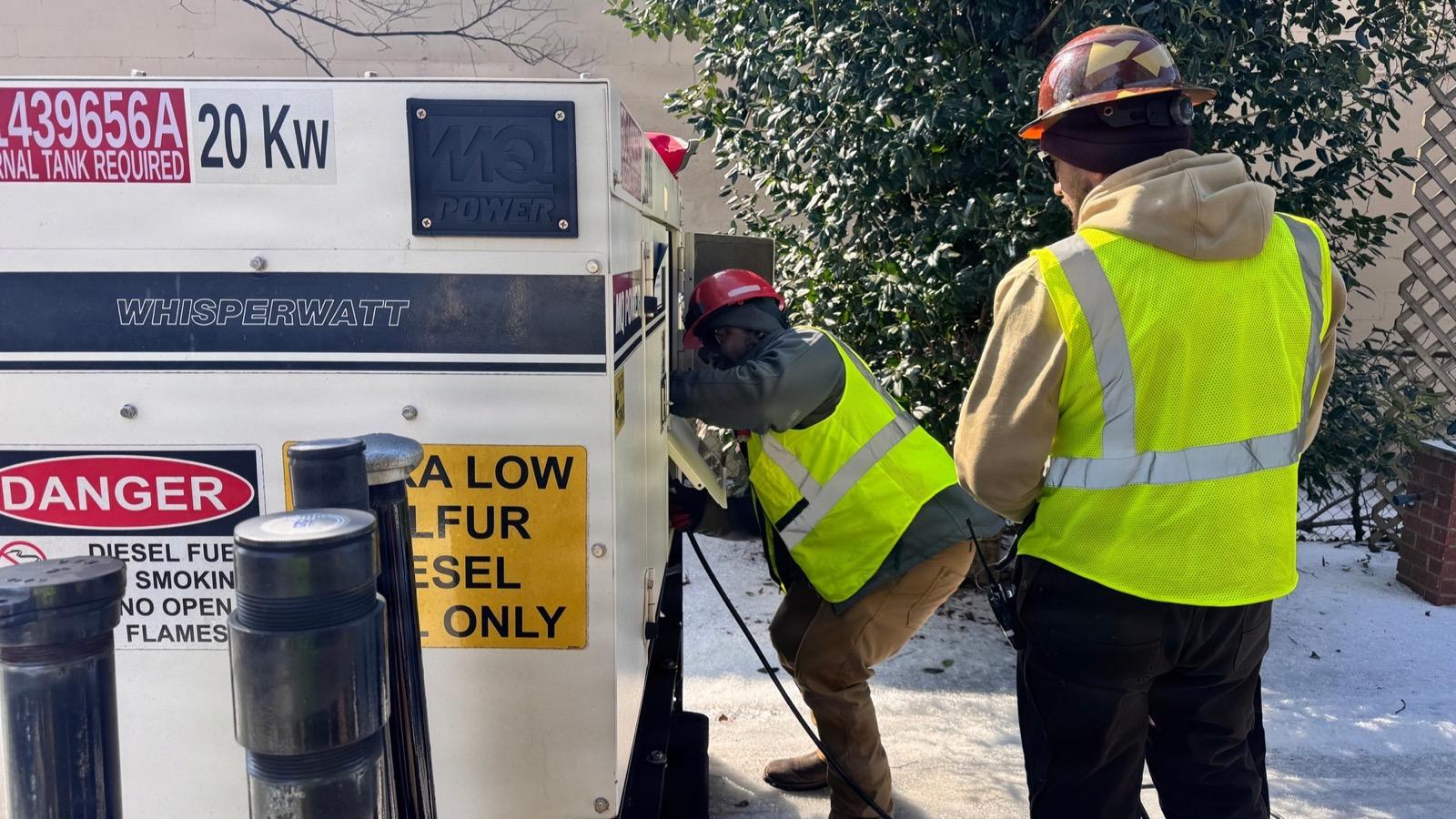
Commercial facilities often request temporary power for a planned electrical shutdown, failed utility equipment, delayed service connection, seasonal capacity limit, construction phase, or continuity plan. The contractor may be asked to supply a battery system, generator, hybrid plant, transformer, switchgear, distribution equipment, cables, installation labour, monitoring, fuel, and on-call support.
A quote based only on a kW or kVA rating does not define that work. Two proposals can show similar source capacity while assigning installation, permits, transfer equipment, testing, fuel, monitoring, and emergency response very differently.
This guide explains what to include when hiring a mission-critical temporary power contractor in Canada or the United States. It is intended for non-life-safety commercial loads. Healthcare, fire pumps, legally required emergency systems, and other regulated applications require a separate engineered and code-specific review.
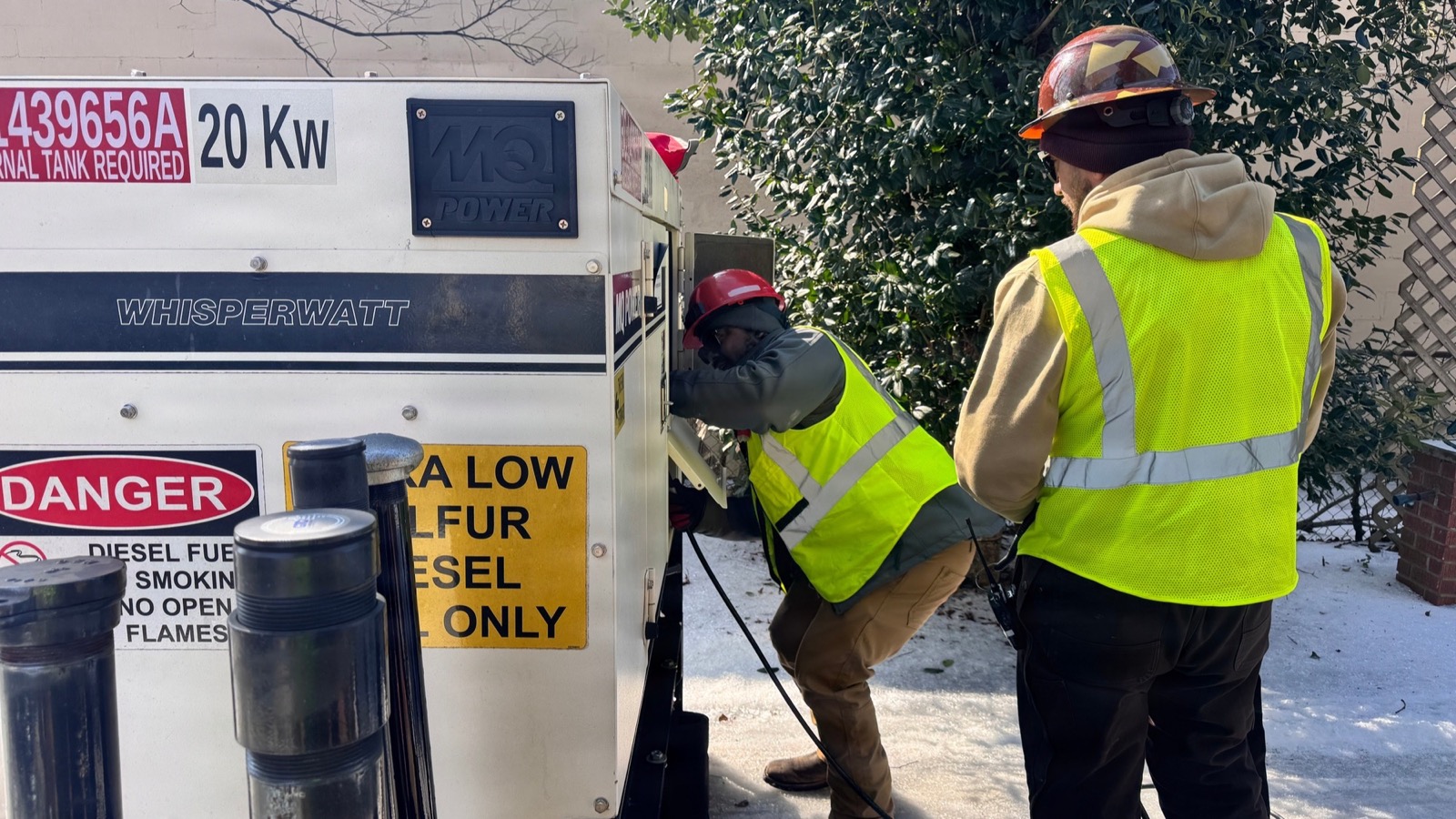
Begin with the required operating outcome
State what the temporary system has to accomplish before listing equipment. A useful opening section identifies:
- Facility, project, and work location
- Reason temporary power is required
- Loads or process areas that must remain operating
- Earliest mobilization date and required in-service date
- Expected rental period and extension options
- Maximum acceptable interruption during transfer
- Required operating hours and unattended periods
- Consequence of losing the temporary source
- Normal utility restoration or permanent-service plan
- Site owner, facility operator, electrical contractor, and project contacts
The U.S. Federal Emergency Management Agency's temporary emergency power training recommends completing facility assessments before power is lost. It notes that commercial and industrial electrical systems vary widely and that identifying the required connection materials is part of the assessment. The same approach applies to planned commercial work: establish the facility conditions before selecting a source.
For the electrical design itself, see our separate guide to mission-critical temporary power planning. It covers protected-load tiers, transfer sequences, redundancy, runtime, recovery, monitoring, and failure testing.
Require a documented site survey
The scope should identify who performs the survey, who must attend, and what the survey must produce. Include the facility operator and a qualified electrical professional who can confirm the distribution system and operating sequence.
A site survey should record:
- Available one-line diagrams and panel schedules
- Utility service voltage, phase, frequency, and grounding arrangement
- Proposed temporary connection point and its condition
- Breaker, switchgear, transfer-switch, and transformer ratings
- Available fault-current and protection information
- Cable route, length, elevation changes, and crossing locations
- Equipment placement area, bearing surface, slope, drainage, and clearances
- Delivery route, gate dimensions, turning area, crane or forklift needs, and weight limits
- Ventilation, exhaust, noise, emissions, spill-control, and fire-separation constraints
- Flood, snow, ice, dust, heat, and other environmental exposure
- Security, keys, escorts, work hours, and access restrictions
- Network or cellular coverage for remote monitoring
- Fuel-delivery or battery-recharge access
- Space required for installation, operation, maintenance, and removal
Ask for a marked site plan with dimensions, not only survey notes. Atlas Copco's temporary-power checklist similarly calls for reviewing installation footprint, access, maintenance visits, site impact, local rules, and decommissioning space. Aggreko describes contingency surveys that identify equipment, placement, connection points, transport, operating methods, responsibilities, and risk assessments.
Provide a load schedule that bidders can price against
The owner should issue the same load information to every bidder. Otherwise, each contractor may make different assumptions about diversity, starting demand, runtime, and reserve.
For each load, provide:
- Equipment description and asset identifier
- Running kW and kVA, or voltage, current, and measured power factor
- Starting current, inrush, or short-duration peak
- Voltage, phase, and frequency
- Daily operating hours and duty cycle
- Required transfer time and restart sequence
- Priority and load-shed order
- Sensitivity to voltage, frequency, harmonics, or interruption
- Expected additions during the rental period
Measured interval data is preferable where the facility can collect it under representative conditions. State the measurement period, sampling interval, weather, production level, and unusual operating conditions. A monthly utility bill does not show motor starts, short peaks, or the load remaining after nonessential circuits are removed.
Ask the contractor to identify every sizing allowance separately. This can include conversion losses, battery operating reserve, temperature, altitude, motor starting, load growth, cable losses, fuel reserve, and recharge demand. A single unexplained percentage makes proposals difficult to compare.
Define the contractor's design deliverables
The scope should require a reviewable design package before mobilization. Depending on the project, the package may include:
- Temporary-power one-line diagram
- Equipment and capacity schedule
- Source voltage, phase, continuous rating, short-duration rating, and operating limits
- Battery capacity and usable reserve, or generator fuel consumption at expected load
- Transformer ratings, vector group, inrush considerations, and losses
- Cable schedule with conductor type, length, ampacity, and voltage-drop calculation
- Distribution panels, disconnects, overcurrent protection, and connector schedule
- Grounding, bonding, neutral, and separately derived system details
- Transfer sequence, interlocks, restart delays, and load-shed logic
- Control-power and communications arrangement
- Site layout and protected cable routes
- Noise, exhaust, ventilation, spill, and fire-control provisions
- Recharge, refuelling, and operating-support plan
- Inspection, permit, utility, and authority requirements
- Installation method and job-hazard or risk assessment
- Commissioning and acceptance-test procedure
- Demobilization and return-to-normal procedure
Do not accept a generic product data sheet as the complete design. The submitted package should show how the selected equipment connects to the actual facility.
Make battery, generator, and hybrid assumptions visible
A technology-neutral scope lets contractors propose the arrangement that fits the load and operating period. It should still require the assumptions behind each option.
For a battery energy storage system, request:
- Nominal and usable kWh
- Continuous and short-duration kW or kVA
- Minimum reserve state of charge
- Expected runtime at the submitted load profile
- Transfer or ride-through arrangement
- Recharge source, input limit, losses, and recovery time while loads remain active
- Low-temperature and high-temperature operating limits
- Remote monitoring, alarms, and data retention
- Response to an unavailable inverter, charger, or battery module
For a generator, request:
- Continuous, prime, or standby rating used for the proposal
- Expected load percentage and fuel consumption
- Fuel type, on-site quantity, refill trigger, and delivery responsibility
- Starting and step-load capability
- Emissions and noise information
- Maintenance intervals during the rental
- Response to a failed start or unavailable unit
For a hybrid system, require a clear control narrative. It should state when the generator starts, when the battery charges, which source carries motor starts, how reserve is protected, and what occurs if communications or automatic controls fail.
Assign responsibilities in the contract
List each activity and assign one accountable party. A simple responsibility table can prevent assumptions from becoming field delays.
| Activity | Owner or facility | Temporary-power contractor | Electrical contractor or engineer |
|---|---|---|---|
| Confirm critical-load list and operating priorities | Lead | Review | Verify electrical data |
| Provide current drawings and access | Lead | Review | Review |
| Complete site survey | Participate | Lead or shared | Lead or verify, as specified |
| Prepare temporary one-line and calculations | Review | Lead or shared | Stamp or approve where required |
| Obtain permits and inspections | As specified | As specified | As specified |
| Prepare equipment pad and access route | As specified | As specified | Consult |
| Deliver and position equipment | Support access | Lead | Observe as required |
| Install temporary connection and protection | Isolate operations as planned | Supply equipment and support | Lead where licensed work is required |
| Commission and test | Witness and accept | Perform assigned tests | Lead electrical verification |
| Operate, monitor, recharge, refuel, and maintain | As specified | As specified | On-call support as specified |
| Restore normal power and remove equipment | Approve outage window | Lead removal | Lead electrical disconnection |
The final table should name companies or roles rather than use vague terms such as "by others." It should also identify who has switching authority and who can approve changes after mobilization.
Specify mobilization and response requirements
For planned work, state the approved delivery window, installation duration, outage window, test window, and latest acceptable in-service time. Include lead times for engineering, permits, utility coordination, switchgear, transformers, cables, and site preparation.
For contingency support, define the service level precisely:
- Phone acknowledgement time
- Qualified technical response time
- Estimated equipment dispatch time
- Site arrival target by region
- Availability of the specified equipment class
- Process when the primary unit is already rented elsewhere
- After-hours labour and transport terms
- Spare cables, connectors, controls, and replacement equipment
- Escalation contacts for operations and management
Avoid treating "24/7 support" as a response time. Ask what staff, parts, and replacement assets are available during nights, weekends, severe weather, and regional emergencies.
Include commissioning and acceptance criteria
Payment and operational handover should follow defined tests. The test plan may include:
- Equipment identity, ratings, inspection records, and damage check
- Cable, connector, phase rotation, polarity, and torque verification
- Grounding, bonding, neutral, and protection checks
- No-load source voltage and frequency
- Transfer and interlock operation
- Motor, compressor, and transformer energization sequence
- Representative step-load test
- Load shedding and delayed reconnection
- Alarm delivery and remote-monitoring verification
- Battery reserve or generator fuel alarm
- Simulated loss of normal power
- Simulated failure of the primary temporary source where redundancy is required
- Recharge or refuelling under continued load
- Return-to-normal sequence
Record measured values and observed timing. A signed sheet that says only "tested" does not show whether transfer time, voltage deviation, phase current, peak load, state of charge, or alarm delivery met the agreed criteria.
The U.S. Environmental Protection Agency's power-resilience guidance recommends a power assessment with electrical, mechanical, and operating specialists. Its public-safety power-shutoff template also calls for phase-rotation checks, grounding, field testing, load testing, operating logs, electrician availability, and confirmed fuel arrangements.
Define operating support and reporting
The contract should state who watches the system and who responds to alarms. Include:
- Monitoring hours and named alarm recipients
- Parameters recorded and reporting interval
- Warning and shutdown thresholds
- Daily or weekly operating report
- On-site inspection schedule
- Preventive-maintenance windows
- Fuel, charge, and runtime logs
- Incident and near-miss reporting
- Change-control process for added loads
- Method for approving planned shutdowns
- Replacement-equipment process
Useful reporting fields include source kW, kVA, power factor, voltage, frequency, phase current, battery state of charge, charge power, fuel level, run hours, alarm history, and maximum observed demand. Ask for the final data export at demobilization so the next plan can use measured information.
Compare proposals on total scope
Use a bid comparison that separates capacity from service. Suggested evaluation headings include:
| Evaluation area | Questions to resolve |
|---|---|
| Technical fit | Does the proposal support the load profile, starting demand, voltage, phase, transfer time, and runtime? |
| Design completeness | Are one-lines, calculations, layouts, protection, grounding, controls, and test procedures included? |
| Site logistics | Are transport, lifting, access, footprint, cable routes, weather, noise, and security addressed? |
| Continuity | What fails over automatically, what requires a callout, and what replacement assets are available? |
| Operations | Who monitors, refuels, recharges, maintains, and responds to alarms? |
| Schedule | Are design, mobilization, installation, testing, and removal durations stated? |
| Compliance | Are permits, inspections, utility coordination, licensed work, and environmental requirements assigned? |
| Commercial terms | Are transport, labour, fuel, energy, standby, overtime, extension, damage, and demobilization costs clear? |
A lower equipment rental rate can produce a higher project cost if engineering, cable, transformer, labour, fuel, monitoring, or after-hours response is excluded.
Plan demobilization before installation
The scope should include the conditions for returning to normal power and removing temporary equipment. Define:
- Notice required before demobilization
- Utility or permanent-source stability criteria
- Approved switching and outage window
- Removal sequence and responsible electrical personnel
- Restoration of panels, openings, grounds, barriers, and cable routes
- Fuel removal and spill inspection
- Battery state-of-charge requirement at return
- Site-condition and damage record
- Final operating-data and test-report delivery
- Return of keys, badges, network access, and temporary credentials
Keep the temporary source available until the permanent system has passed the agreed restoration checks. Removing it immediately after utility voltage returns may leave no fallback if the normal source fails during the first restart.
Where Apex Station can fit in a contractor scope
The Apex Station has published specifications of 120 kWh usable LiFePO4 capacity, 30 kW continuous output, and 60 kVA or greater peak output capacity. Configurations are available for 120/240 V output and single-phase or three-phase service. Its published transfer time is less than 20 milliseconds, and it can charge from grid, generator, or solar.
These specifications can support the initial screening of a commercial temporary-power request. A contractor scope must still verify the measured load schedule, motor and transformer inrush, required autonomy, reserve, recharge rate, voltage, phase, grounding, protection, transfer arrangement, temperature, communications, distribution, and failure response.
For example, a submitted load schedule with a 12 kW verified running peak and 70 kWh planning requirement is below the published continuous output and usable capacity. That comparison does not confirm motor-start performance, transfer suitability, code compliance, or final runtime. Those items belong in the contractor's calculations and acceptance test.
Apex Station should not be specified from its product rating alone for legally required emergency, healthcare, fire-protection, or life-safety service. The facility engineer, authority having jurisdiction, electrical contractor, equipment manufacturers, and insurer should confirm the required architecture, listings, approvals, and tests.
Scope-of-work checklist
- State the operating outcome, critical loads, interruption limit, schedule, and rental period.
- Require a documented site survey and marked equipment layout.
- Issue one load schedule and operating profile to every bidder.
- Ask bidders to separate all sizing assumptions and reserves.
- Require a one-line diagram, equipment schedule, cable schedule, connection details, and control narrative.
- Assign permits, inspections, site preparation, installation, testing, monitoring, fuel, charging, and maintenance.
- Define mobilization, acknowledgement, site arrival, and replacement-equipment times.
- Use measurable commissioning and acceptance criteria.
- Identify alarm owners, escalation contacts, operating reports, and change control.
- Compare complete installed and supported cost, not only the source rental rate.
- Define restoration, disconnection, site repair, data handover, and demobilization.
- Have qualified electrical and engineering personnel review the complete arrangement.
Sources
- FEMA IS-815, Facility Generator Assessment and Temporary Emergency Power Preparedness
- FEMA P-1019, Emergency Power Systems for Critical Facilities
- U.S. EPA, Power Resilience Guide for Water and Wastewater Utilities
- U.S. EPA, Public Safety Power Shutoff Standard Operating Procedure Template
- Aggreko, Manufacturing Contingency Planning
- Aggreko, Utility Contingency Planning
- Atlas Copco, Temporary Power Supply Checklist
- United Rentals, Power and HVAC Rental Solutions
- DVIDS, Temporary Generator Connection at a Water Pump Station