
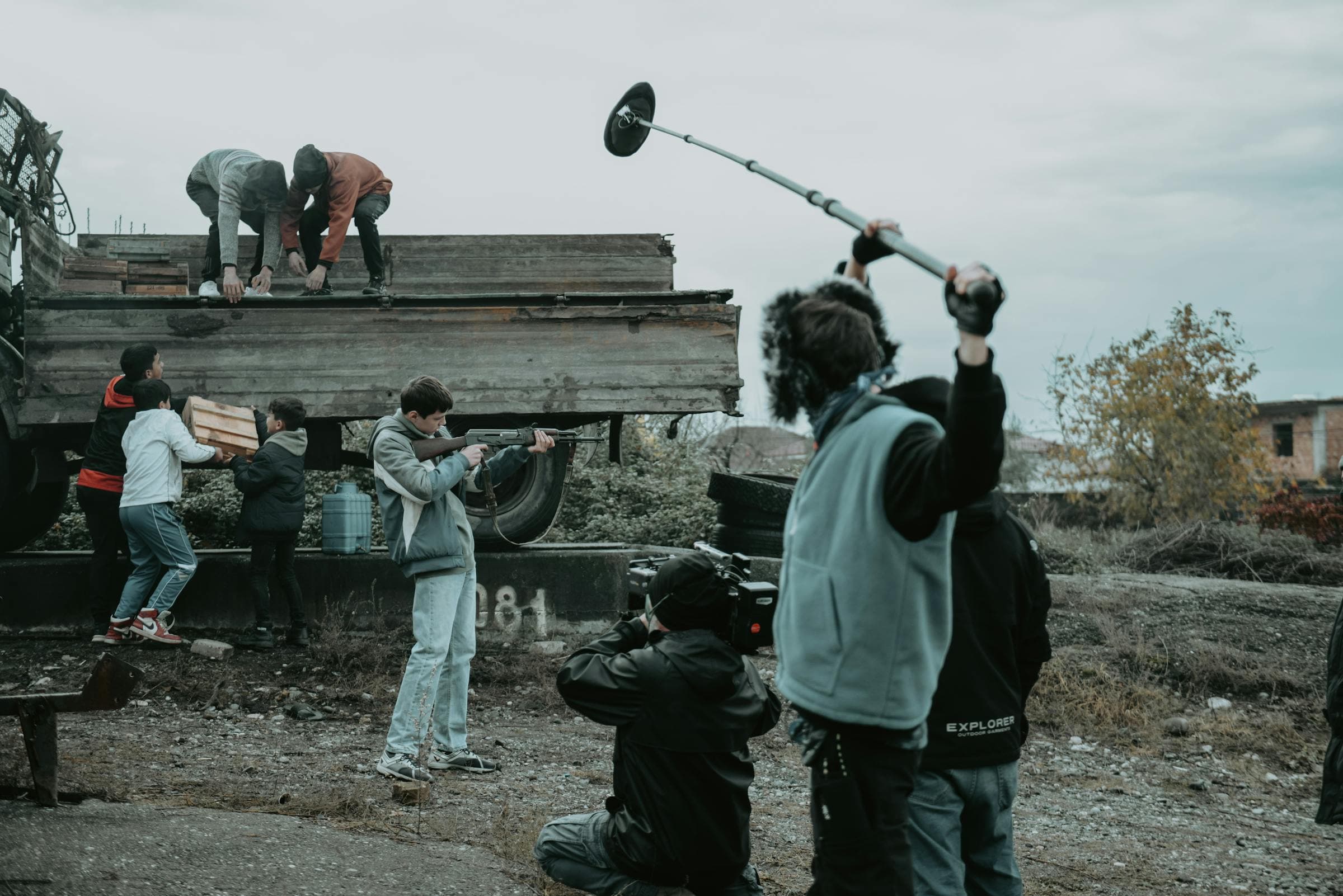
Film crews are used to working around noise. Traffic, aircraft, HVAC, crowds, weather, and nearby work all make location sound harder to capture cleanly. Generators can add another constant layer: engine rumble, exhaust fans, vibration, refueling activity, and the operational drag of placing power far away from set.
Portable battery systems give productions a cleaner option for many of those loads. They discharge silently, produce no local exhaust, and can often sit closer to the equipment they support. For the right use cases, that changes the feel of a location day.
The goal is not always to remove every generator from a production. More often, battery power gives the crew a quieter layer of power where sound, access, and flexibility are most valuable.
Why generator noise creates friction on set
Traditional generators are powerful, familiar, and still useful on many productions. The challenge is that they are noisy by nature.
A generator can create problems through:
- Continuous engine and fan noise
- Low-frequency rumble that travels farther than expected
- Vibration through pavement, floors, trailers, or temporary structures
- Cable runs that become longer because the unit has to sit away from set
- Communication friction when crew work near the generator
- Idle runtime during lighter load periods
Sound teams can work around some of this with distance, blankets, baffling, placement, and careful mic technique. But every workaround takes time and adds constraints. Battery systems reduce that pressure because they do not create combustion noise while powering loads.
Where quiet power helps most
Battery systems are especially useful in sound-sensitive zones, intermittent-load areas, and locations where a generator would be disruptive.
| Production area | Common loads | How battery power helps |
|---|---|---|
| Dialogue set | Monitors, small LED fixtures, wireless gear, charging | Keeps support power close without raising the noise floor |
| Camera village | Monitors, video assist, comms, laptops, device charging | Reduces cable distance and improves crew communication |
| DIT station | Workstations, drives, displays, routers, chargers | Provides steady, local power for sensitive electronics |
| Base camp | Hair and makeup, wardrobe, talent areas, office loads | Cuts generator hours in areas where people spend long stretches |
| Interviews | Lights, camera support, audio accessories | Avoids low background hum near microphones |
| Urban permits | Select circuits, comms, holding areas | Limits noise complaints and fuel logistics in tight spaces |
For many crews, the highest-value battery deployment is not the biggest load on the show. It is the load closest to microphones, talent, clients, neighbors, or the production team.
Battery systems and the noise floor
The noise floor is the baseline sound level in a recording environment. A quiet room, street corner, or outdoor set still has a sound floor made up of ambient sources. When a generator runs nearby, that baseline can rise, and low-frequency noise may be difficult to remove later.
Battery discharge is effectively silent at the production level. Some systems include fans under heavier loads or charging conditions, but the sound profile is usually far easier to manage than an engine-driven generator.
That gives the assistant director, sound mixer, gaffer, and locations team more room to work:
- Fewer interruptions for generator noise
- Less time spent repositioning power between setups
- Cleaner conditions for interviews and dialogue-heavy scenes
- Easier communication around video village and base camp
- More options in courtyards, alleys, rooftops, interiors, and residential areas
Quiet power does not remove the need for sound discipline. It simply takes one major avoidable source out of the environment.
Close-to-load placement
One of the practical advantages of portable battery power is placement. A generator may need to sit far from set because of noise, exhaust, access, or fuel handling. A battery unit can often sit much closer to the load.
That can help with:
- Shorter cable runs
- Faster setup and reset
- Cleaner cable management
- Reduced trip hazards
- Less voltage drop on long runs
- Easier movement between locations
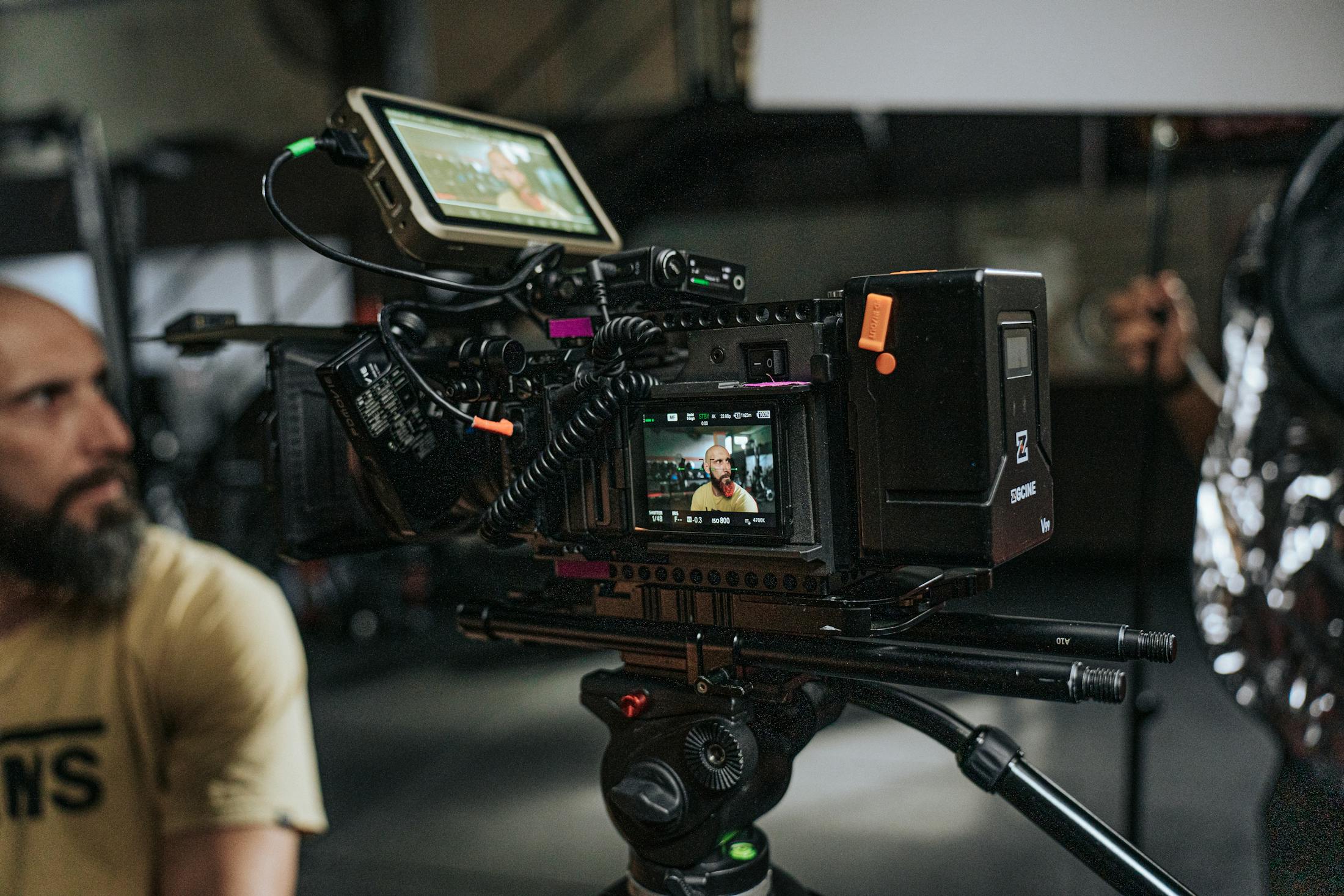
Close placement is especially helpful for camera village, DIT, charging tables, small lighting packages, and temporary office setups. Instead of routing everything back to a distant generator, the crew can localize power around the work zone.
Reducing idle runtime
Generators are often sized for the largest expected demand, then left running through lighter periods. Film sets rarely use the same amount of power all day. Demand changes during prep, blocking, shooting, company moves, resets, lunch, and wrap.
Battery systems handle variable loads well. They can power lower-demand periods without an engine idling in the background, then recharge from grid, solar, or generator support when the schedule allows.
That approach can reduce:
- Fuel use
- Runtime hours
- Refueling interruptions
- Local exhaust
- Background noise during light-load periods
For longer shoot days or heavier loads, a hybrid setup can work well: use the battery close to set and run a generator only when charging, high-demand support, or schedule resilience calls for it.
Common film set loads for portable battery power
Battery systems are not all the same size. A compact station and a larger mobile battery energy storage system serve different roles. The best configuration starts with the equipment list, the expected runtime, and the recharge plan.
Common battery-friendly loads include:
- Director and client monitors
- Video village carts
- DIT workstations
- Camera batteries and lens motor batteries
- Wireless video and communications gear
- Phones, tablets, radios, and laptops
- LED practicals and smaller fixtures
- Makeup mirrors and small support appliances
- Production office equipment
- Wi-Fi, networking, and router hardware
Larger battery systems can support more demanding zones such as base camp, production trailers, multi-circuit support, or selected lighting packages. The sizing step is where a rough idea becomes a workable plan.
When battery power is not the whole answer
Battery power is useful, but it is not a universal replacement for every generator on every production.
Generator or hybrid support may still be the better fit for:
- Very high continuous loads
- Large lighting packages with long runtime requirements
- Remote locations without reliable recharge windows
- Multi-day shoots with limited solar or grid access
- Cold-weather schedules that reduce battery performance
- Situations where the load profile is still uncertain
The right design may be battery-only for one department, hybrid for base camp, and generator-backed for high-demand lighting. That is normal. The value comes from matching each load to the cleanest and quietest practical power source.
Planning a quieter production power setup
A useful film power plan starts before the truck arrives.
Ask these questions during prep:
- Which scenes or departments are most sound-sensitive?
- Which loads need to sit close to talent, cameras, or clients?
- How many watts does each zone need during a normal working block?
- How many hours must each zone run between recharge windows?
- Can the system recharge from grid, solar, or scheduled generator support?
- What cable routes, access paths, and safety boundaries are required?
Those answers help determine whether the production needs a small portable station, a wheeled mobile battery system, a larger BESS platform, or a hybrid package.
If you need a quick refresher on sizing by energy capacity, start with what Wh means in a battery. For a production-specific overview, see our film production power solutions.
Battery power for interviews and documentary work
Interview-heavy projects are a natural fit for battery systems. The loads are usually manageable, the audio environment is central to the work, and the crew often moves through homes, offices, studios, hotels, or public spaces where generators are awkward.
A battery setup can support:
- Key and fill lights
- Camera and monitor power
- Audio accessories
- Laptop capture workflows
- Device charging
- Router or hotspot equipment
The benefit is not only lower sound. It is fewer location complications. No fuel nearby, no exhaust plan, less equipment outside, and fewer conversations with property managers or neighbors about engine noise.
Battery power for base camp and support zones
Base camp is another strong use case because loads tend to run for long periods at moderate demand.
Hair and makeup, wardrobe, production office, charging, comms, and talent holding can all create steady background power needs. If those zones sit near residences, businesses, or active filming areas, generator noise can turn into a daily annoyance.
A battery system can cover those loads quietly, then recharge during planned windows. For larger productions, this can reduce generator hours without changing the entire electrical strategy.
What to watch when choosing equipment
When comparing portable power systems for film production, pay close attention to:
- Continuous output rating
- Surge capability
- Battery capacity in watt-hours or kilowatt-hours
- AC outlet types and circuit options
- Whether 120V or 120/240V split-phase output is needed
- Fan behavior under load
- Recharge speed
- Pass-through power capability
- Weather protection and placement limits
- Transport, wheels, lifting points, and crew handling
The equipment should fit the production workflow, not just the spec sheet. A system that is easy to place, cable, monitor, and recharge will be used more effectively on a busy set.
Final takeaway
Portable battery power helps film and television crews reduce generator noise where it creates the most friction: near microphones, talent, camera village, DIT, interviews, base camp, and permit-sensitive locations.
It can shorten cable runs, improve communication, reduce idle generator hours, and give locations teams more options. For many productions, the strongest approach is not battery versus generator. It is a smarter blend of quiet battery power near set and generator or grid support where it still makes operational sense.
When the power plan supports the sound plan, the whole set gets easier to manage.