
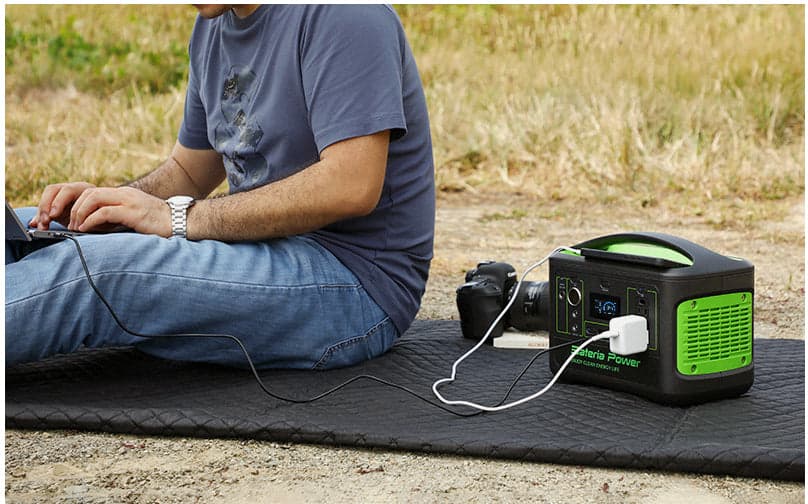
Portable power stations have become one of the most practical upgrades for campers who want quiet, low-maintenance electricity without hauling fuel, listening to engine noise, or dealing with generator exhaust around camp.
For this part of the market, the sweet spot usually sits between 400Wh and 5000Wh. If you want a quick primer before comparing battery sizes, read our guide on what is Wh in battery. That range covers everything from lightweight weekend setups to much larger systems that can support a camper van, basecamp, or multi-day off-grid stay with real comfort.
The key is not asking, "What is the biggest unit I can afford?" The better question is, "What do I actually need to power, for how long, and how often can I recharge?"
What counts as a portable power station in this range?
In practical terms, these are self-contained battery systems that typically include:
- AC outlets for common household-style devices
- USB-A and USB-C ports for phones, tablets, cameras, and laptops
- DC or car-style outputs for camping accessories
- Built-in charge controllers and inverters
- Recharge options from wall power, a vehicle, or solar panels
Compared with larger trailer-mounted or containerized battery energy storage systems, this class is much smaller and more consumer-friendly. These units are made for mobility, but there is still a big difference between a 400Wh grab-and-go station and a 5000Wh rolling high-capacity unit.
Common camping use cases for portable power stations
Portable stations in the 400Wh to 5000Wh range are often used for:
- Charging phones, tablets, watches, and headlamps
- Running camp lighting and string lights
- Keeping cameras, drones, and action batteries topped up
- Powering laptops for remote work or editing on the road
- Operating portable fridges and coolers
- Running CPAP machines overnight
- Supporting fans, small pumps, routers, or Starlink-style connectivity setups
- Powering a projector, speaker, or cooking accessory for more comfortable car camping
For campers, overlanders, and van users, the biggest benefit is usually quiet convenience. You get electricity on demand without noise complaints, fuel storage, or the stop-and-start behavior that makes generators annoying in shared campsites.
A realistic capacity guide: 400Wh to 5000Wh
Not every camper needs the same size. A good starting point is to choose by trip style, not just watt-hours.
| Capacity range | Best fit | Typical camping use cases |
|---|---|---|
| 400Wh to 800Wh | Lightweight and occasional use | Phone charging, lights, cameras, drones, laptops, small fans |
| 1000Wh to 1500Wh | Weekend car camping | Portable fridge, laptops, charging hub, CPAP, lighting |
| 2000Wh to 3000Wh | Comfort-focused off-grid camping | Fridge, work setup, communications gear, longer runtimes, more simultaneous loads |
| 3000Wh to 5000Wh | High-demand mobile living or basecamp | Van builds, extended stays, larger DC and AC loads, group camping, field support |
When a 400Wh to 800Wh station makes sense
This is the entry tier for camping power. It is usually best for people who want a compact battery to cover the basics without carrying much weight.
This size works well for:
- Tent camping with lighting and device charging
- Weekend trips where the vehicle is nearby
- Day-use recreation, tailgating, or beach setups
- Photographers or drone users who need a mobile charging hub
What it does well:
- Keeps small electronics organized and charged
- Replaces a pile of power banks with one central device
- Makes camp lighting and personal comfort much easier
What it does not do well:
- Sustain a fridge for long periods without recharging
- Power multiple AC devices for hours
- Support high-draw appliances like kettles, hot plates, or space heaters
For a lot of casual campers, this range is enough. If your electrical needs are mainly convenience-based, going much larger can add cost and weight without creating much real value.
When 1000Wh to 1500Wh is the better camping sweet spot
For many buyers, this is where portable power stations start feeling genuinely versatile. The unit is still manageable, but the usable runtime opens up.
This range is often a smart choice for:
- Car campers staying out for a full weekend
- Campers running a portable fridge instead of relying on ice
- Remote workers who bring a laptop, router, or hotspot
- Campers using CPAP equipment overnight
- Families charging several devices at the same time
This is also where solar charging becomes much more useful. Pairing a station in this range with portable solar panels can stretch runtimes meaningfully during sunny conditions, especially when your loads are modest and consistent.
When 2000Wh to 3000Wh becomes worth it
Once you move into the low-thousands, you are not just buying backup charging. You are buying multi-day flexibility.
This range is a strong fit for:
- Longer trips with a fridge running continuously
- Overlanding rigs with communication gear and accessory charging
- Campers who want a quieter alternative to fuel-powered generation
- Small mobile workstations for content creation, mapping, or field coordination
- Group camping where several people share one power source
The biggest advantage here is not just runtime. It is the ability to run more than one meaningful load at the same time without constantly watching the battery meter.
When 3000Wh to 5000Wh is justified
At the top of the "portable" consumer-friendly segment, you are getting into systems that blur the line between a typical power station and a light-duty mobile energy platform.
This size is often best for:
- Camper vans and small RV-style setups
- Extended boondocking with planned recharging
- Remote basecamp setups with connectivity, refrigeration, lighting, and device charging
- Heavier field use where portability still matters but output and runtime matter more
These systems are often overkill for casual weekend campers, but they can be the right answer for buyers who want:
- Longer runtime with fewer recharge interruptions
- More inverter headroom
- Better support for layered loads throughout the day
- A bridge between recreation use and light-duty professional field use
What can a camping power station actually run?
The right way to think about runtime is to group devices by role:
Low-draw essentials
These are the easiest loads for portable stations to handle:
- Phones
- Tablets
- GPS devices
- Battery chargers
- LED lanterns
- Headlamps
Even smaller units can usually cover these comfortably.
Medium everyday camping loads
This is where sizing becomes more important:
- Laptops
- Portable fridges
- Camera and drone charging
- Fans
- Wi-Fi or satellite internet hardware
- CPAP machines
If these are part of your regular camping setup, a station around 1000Wh or higher is often the safer starting point.
Short-duration higher loads
Some devices may be possible, but only with enough inverter capacity and careful runtime expectations:
- Coffee makers
- Blenders
- Small induction appliances
- Hair dryers
- Electric cooking accessories
These are the kinds of loads that can empty a battery quickly, even if the station is technically capable of running them. For camping, the question is not just whether a device works. It is whether using it makes sense for your energy budget.
How to choose the right size for camping
Before buying, list the devices you expect to use in a normal day and sort them into three groups:
- Must-have loads
- Nice-to-have comfort loads
- Rare or occasional loads
Then estimate:
- How many hours each device runs
- Whether the load is AC or DC
- Whether you can recharge daily from a vehicle, shore power, or solar
If your must-have loads are just personal electronics and lighting, stay near the lower end.
If your must-have list includes a fridge, CPAP, laptop workflow, and connectivity gear, you will usually want to move up.
If you are trying to support a more complete off-grid lifestyle, the upper part of the range becomes much more realistic.
Features that matter more than marketing
When evaluating camping-focused portable power stations, pay close attention to:
Usable battery capacity
The advertised watt-hour rating matters, but your real-world experience depends on inverter losses, temperature, charge state, and how heavily you use AC output.
Inverter rating
Capacity tells you how long the battery can last. The inverter tells you what it can run at a given moment. Many buyers focus on watt-hours and forget to check continuous AC output.
Weight and transport
A 5000Wh system may still be considered portable in product positioning, but it is very different from carrying a 500Wh unit with one hand. Think about stairs, vehicle loading, and whether you move camp often.
Recharge options
For camping, recharge flexibility is critical. Vehicle charging and solar input can matter almost as much as the battery itself.
Battery chemistry
For frequent use, buyers often prioritize longer-life chemistries because they hold up better over many cycles and fit the ownership pattern of regular campers or van users.
Port selection
If most of your devices are USB-C, you may not need as many AC outlets as you think. If your setup depends on household plugs, outlet count and inverter power become more important.
When a camping power station is a better choice than a generator
Portable power stations are usually the better fit when:
- You want quiet operation
- You camp in shared spaces
- Your loads are relatively small to moderate
- You do not want to carry fuel
- You care about simple indoor-safe charging and use
Generators still have a role when:
- You need very high continuous output
- You need long runtimes without waiting on recharge
- Your use case involves power-hungry tools or heating loads
For camping, though, many people discover that a battery station is the more practical everyday solution because their actual needs are smaller than they assumed.
Final takeaway
For camping, 400Wh to 5000Wh is a wide but useful portable power range. The right size depends less on brand claims and more on trip length, device mix, recharge access, and how much comfort you want off-grid.
- Choose the lower end for lightweight convenience and personal electronics.
- Choose the middle range for fridges, CPAPs, remote work, and dependable weekend use.
- Choose the upper end for extended stays, van life, or more capable mobile basecamp setups.
If you size the system around your real daily loads instead of your best-case wishlist, you are much more likely to end up with a portable power station that gets used constantly and solves real problems in camp.